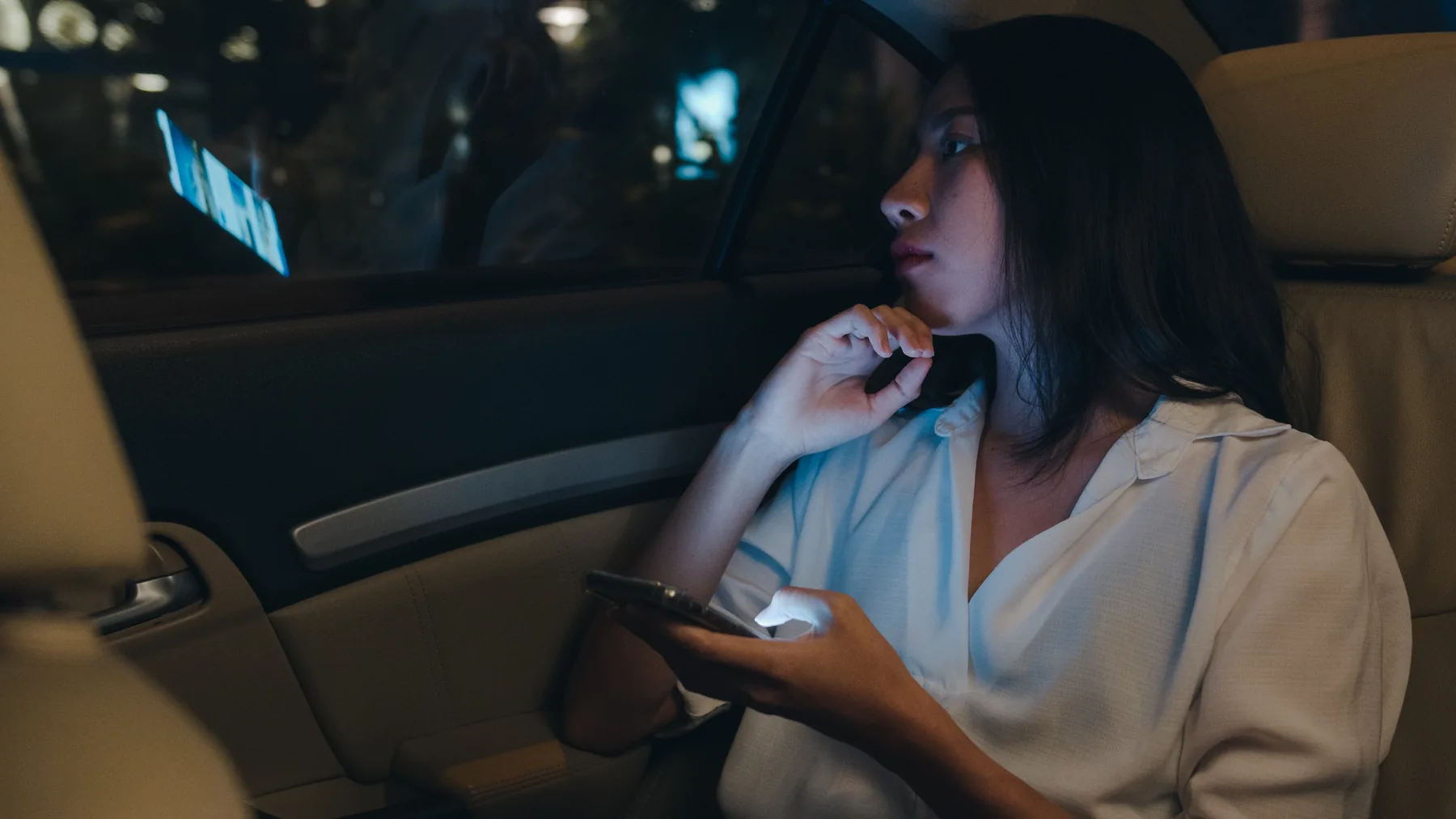
A 25-year-old Seattle woman realized she was in an impostor’s car only after her real Uber ride was canceled. The incident exposes an uncomfortable legal question: where does rideshare-platform responsibility begin when the person behind the wheel was never matched through the app?
The first sign something was wrong came after the car was already on Interstate 5.
A 25-year-old woman had ordered an Uber after leaving a bar in the 400 block of First Avenue South in Pioneer Square on October 10, 2026. A white four-door sedan arrived. She opened the door and asked whether the vehicle was there for her.
The driver said yes.
She got in.
According to Seattle police, the driver later passed the exit she expected him to take. Then her phone showed something that changed the meaning of the entire ride: her actual Uber trip had been canceled.
She noticed that the man driving her was following Google Maps rather than the Uber app. She began texting friends. After the car reached Kent, she jumped out at a red light and eventually connected with friends near Military Road South and Kent-Des Moines Road.
Seattle police described the man as a rideshare impersonator. As of the department’s October 19 public notice, investigators did not have a license plate number, and police said real-time crime center cameras in the relevant area were not functioning.
No public evidence currently suggests that the man was the Uber driver assigned to her ride.
That fact changes the civil-liability analysis almost completely.
This Is Not an Ordinary Uber Passenger‐Injury Case
When an Uber passenger is hurt during a trip with the driver shown in the app, there is usually a defined chain of relationships to investigate. There is an identified driver, a platform record, a matched ride and potentially transportation-network-company insurance tied to the driver’s status at the time.
An impostor case starts somewhere else.
If the person never drove for Uber on that trip, the most obvious agency theory is missing. The alleged wrongdoer was not carrying out an Uber ride. The ordinary question — whether a rideshare company is responsible for its driver — becomes the wrong question.
The harder question is whether the platform itself did something that created or increased a foreseeable risk that an impostor could exploit.
That theory is possible to articulate. Proving it is another matter.
Washington Requires the App to Show the Driver and License Plate
Washington’s rideshare statute requires a transportation network company’s digital network or website to display a photograph of the driver and the license plate number of the vehicle.
That requirement, RCW 46.72B.060, reflects how app-based pickup is supposed to work: the passenger receives identifying information before entering the vehicle and can compare the person and car in front of them with the information on the screen.
The Pioneer Square incident shows the limit of that system.
The woman had ordered a legitimate ride. A vehicle arrived in the place and time where she expected one. She asked a direct question. The man allegedly lied.
It is easy after the fact to say she should have checked the plate. That observation does not answer the legal question and should not be used to turn an intentional deception into the passenger’s fault.
The useful question is what a platform can reasonably do when criminals know exactly how the pickup process works.
Courts Have Already Seen a Version of This Problem
This is not the first time an alleged rideshare impostor has raised a theory of platform-created risk.
In an earlier California case, a passenger alleged that a man posing as an Uber driver picked her up and assaulted her. The attacker was not the driver dispatched to her through the app. A divided Ninth Circuit panel allowed the plaintiff to proceed past the duty stage on a theory that Uber’s pickup model itself could contribute to a foreseeable impostor-driver risk.
That decision did not establish that Uber caused the assault. It did not decide breach or causation. It was also an unpublished federal appellate disposition applying California law, not a controlling Washington rideshare decision.
Those limitations matter.
But the case illustrates why impostor incidents cannot always be reduced to, “The attacker did not work for Uber, so Uber has nothing to do with it.” A plaintiff may instead examine the platform’s own design, warnings, verification procedures and knowledge of prior similar incidents.
Whether Washington law would recognize such a claim on a particular set of facts would require a separate analysis.
The Canceled Ride Is an Important Fact — But Not Proof of an App Defect
The most memorable part of the Seattle incident is the timing.
The woman was already inside the impostor’s moving vehicle when the Uber app told her that her legitimate ride had been canceled.
That makes the story frightening. It does not, by itself, establish that Uber’s app was defective or negligent.
A serious civil investigation would need to reconstruct what happened on the legitimate side of the transaction. Which driver had been assigned? Why was the ride canceled? Did the assigned driver arrive? What did GPS data show? What notifications were sent, and when? Did the platform have any information indicating that the passenger had moved away from the pickup location before the cancellation?
Those are answerable questions if the relevant records still exist.
They are also more useful than inventing a hypothetical feature that the app supposedly should have had.
Rideshare Insurance May Not Follow the Passenger Into an Impostor’s Car
Washington requires transportation network companies and drivers to carry insurance for defined periods when a driver is logged into the network or providing a prearranged ride.
An impostor who was never matched through the platform does not fit neatly into those categories.
That can create a practical problem even if the criminal actor is eventually identified. A serious assault, kidnapping or crash claim against an individual is only as valuable as the available assets and insurance. A personal auto policy may exclude intentional criminal conduct or commercial activity, and the TNC policy may take the position that there was never a covered trip in the first place.
That is why lawyers looking at these cases tend to investigate beyond the attacker himself. The existence of another viable defendant can determine whether a civil judgment is actually collectible.
None is apparent from the public facts here yet.
What About the Bar, the Pickup Zone or the City?
A crowded nightlife district produces another set of possible questions.
Could a bar or property owner have a duty based on prior similar incidents? Was there a designated pickup area that created a particular risk? Were public cameras expected to cover the location? Did anyone know impostor drivers had been targeting the area?
Those are fact-dependent premises and negligence questions, not automatic claims.
The police report that nearby real-time crime cameras were not functioning is important to the investigation because it may explain why police lacked a plate number. It does not automatically create civil liability against the city.
A camera that might have helped identify a suspect after the fact is different from a safety measure that would have prevented the encounter in the first place.
The Most Important Evidence May Be Digital
If police identify the driver, the physical vehicle will matter. So will the data surrounding the legitimate Uber request.
Potential evidence could include the passenger’s Uber trip history, screenshots, cancellation records, the matched driver’s records, GPS data, phone records, text messages to friends, surveillance from private businesses and traffic-camera material from the route into Kent.
The woman’s contemporaneous messages may be particularly valuable because they document what she was realizing while the event was still happening.
That evidence can answer two different questions: what the impostor did, and what was happening inside the legitimate rideshare transaction at the same time.
Safety Advice Should Not Become Victim Blaming
Seattle police used the incident to remind passengers to verify the driver’s name and license plate before entering a vehicle. That is sensible advice.
It should not obscure what happened.
The woman did not accidentally wander into an unrelated car. According to police, she asked the driver whether he was there for her and he falsely confirmed that he was. A person allegedly exploited the expectations created by app-based transportation to deceive her.
The point of checking the plate is to defeat that deception. The deception remains the wrong.
What Happens Next
The immediate story is still a criminal investigation. Police have asked anyone with information to contact the department.
If the driver is identified, the legal picture may become much clearer. Investigators may learn whether he had any prior relationship with Uber or another rideshare platform, whether he had engaged in similar conduct before, how he knew where to position his car and what route he intended to take.
A civil case, if one is ever filed, would also tell us which duty theories the passenger’s lawyers believe can be supported by actual evidence.
Until then, the safest legal conclusion is a narrow one: an impostor rideshare case is not automatically an Uber case simply because the victim had opened the Uber app. But the absence of an employment relationship does not necessarily end every possible inquiry into platform-created risk.
That distinction is exactly where the interesting legal question begins.
A Note for Washington Rideshare Passengers
The Law Office of J.D. Smith, PLLC handles serious rideshare injury and assault-related civil claims in Washington. The firm is not involved in the Pioneer Square investigation.
General legal information only. The viability of a civil claim depends on the facts, the identity of the parties, available insurance and Washington law applicable to the particular event.
General legal information only. Allegations and pending cases are not findings of fact. The firm does not represent any party identified in this reporting unless expressly stated.

Join the Conversation
Comments are moderated before publication. Keep it relevant, civil, and respectful of the people involved.