Waymo has placed Seattle in its expansion plans. Here is what that means now, what a future rider can expect from pickup to drop-off, and what to do if a driverless trip does not go as planned.
Seattle drivers have already seen camera- and sensor-covered Waymo vehicles moving through the region. That makes the arrival of driverless rides feel close. But seeing a Waymo on the road is not the same thing as being able to request one.
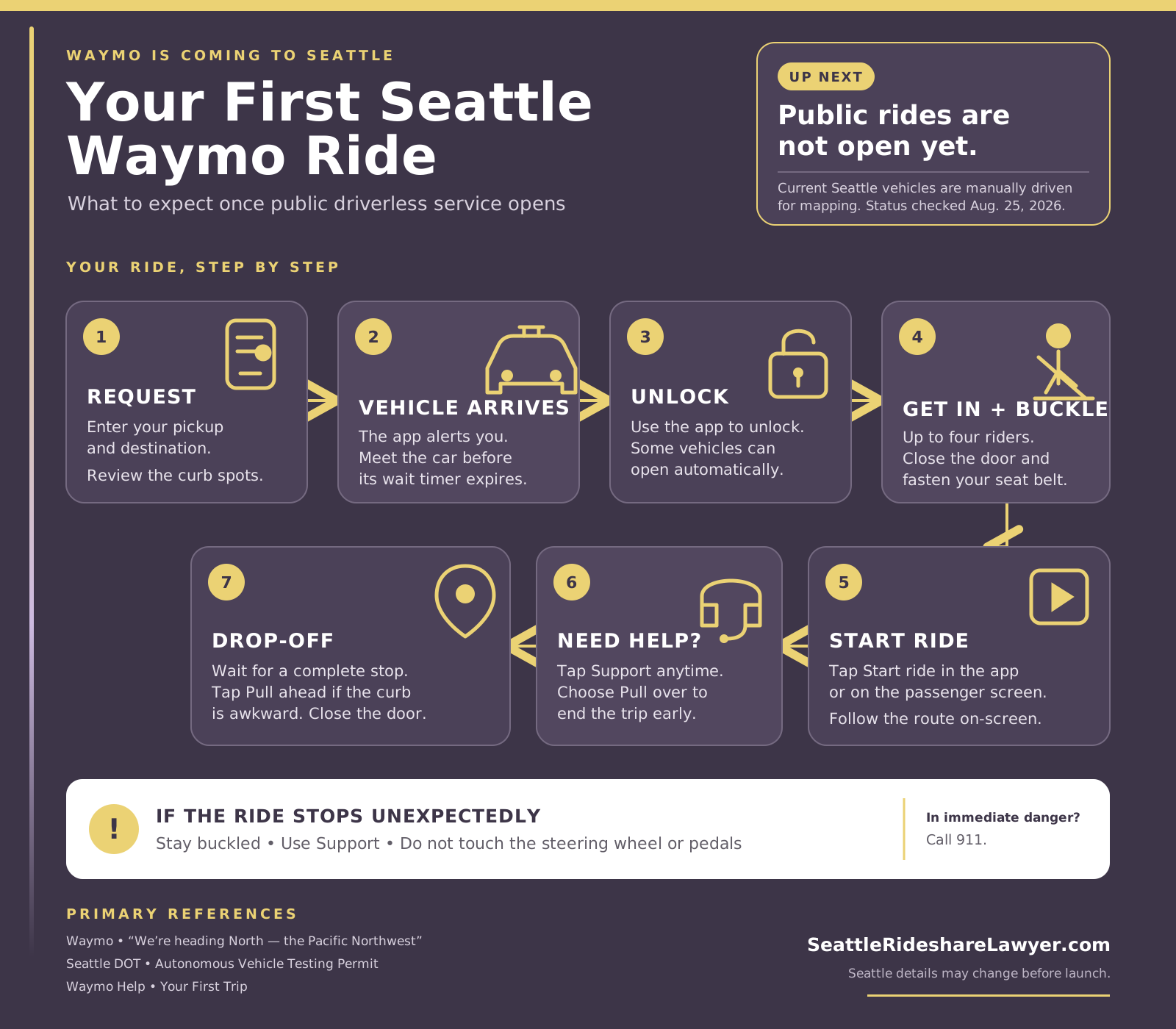
Waymo announced its Seattle expansion on September 2, 2025, saying it intended to work toward service in the broader metropolitan area. As of August 25, 2026, the company’s ride page still places Seattle under “Up Next” rather than “Serving Riders In.” Waymo has not published a Seattle launch date or public service map.
The City of Seattle adds an important detail: its current Waymo data-collection vehicles are fully manually driven, with the automated driving system inactive. Those vehicles are learning the streets; they are not yet carrying members of the public without a human driver.
Waymo can change features as it expands, but its current rider instructions provide a practical preview of the process Seattle passengers should expect.
- Request the ride. Open the Waymo app, enter your pickup location and destination, and review the proposed pickup and drop-off spots. The app selects places where the vehicle can pull over; available spots can be adjusted before the ride begins.
- Meet the arriving vehicle. The app sends an alert when the car is about one minute away and another when it arrives. In a busy area, get to the pickup point promptly. The car may need to leave rather than block traffic, and the app displays its remaining wait time.
- Unlock the car. A Waymo arrives locked. The rider unlocks it from the app, although some vehicles can be set to unlock or open automatically. Match the vehicle shown in the app before opening the door.
- Get in, close the door and buckle up. Waymo’s current rules allow up to four passengers. Service animals are welcome. The trip does not begin merely because everyone is seated.
- Start the ride. Once everyone is buckled, tap “Start ride” in the app or on the passenger screen. That screen displays the route and a visualization of what the automated driving system is detecting around the vehicle.
- Use Support or pull over when needed. Riders can reach Support through the app or in-car screen at any time. To end a trip early, select “Pull over.” The vehicle will look for an eligible place to stop rather than releasing passengers in a traffic lane.
- Exit at drop-off. Wait until the vehicle has completely stopped. If the selected curb is inconvenient, Waymo currently offers a “Pull ahead” option that looks for another eligible spot, generally up to a block away. Take your belongings and close the door behind you.
What Happens If a Driverless Ride Stops Unexpectedly?
A driverless vehicle may stop because it is evaluating a road condition, because of a mechanical problem, or because a collision has occurred. Waymo’s instructions tell riders to remain inside with their seat belts fastened unless there is an urgent need to exit. Riders should not touch the steering wheel, accelerator or brake pedal.
Support can speak through the car or the rider’s phone. If the vehicle cannot continue, Waymo says it may dispatch Roadside Assistance. This is not a remote driver taking control from a call center: Waymo says its cars are not remotely driven while operating autonomously.
What to Preserve After a Waymo Collision
The absence of a human in the driver’s seat does not make a collision legally invisible. It may make the evidence more technical. Responsibility could depend on what the automated driving system detected, whether another driver or road user caused the impact, how the vehicle was maintained, and which companies controlled the vehicle and service at the time.
When it is safe to do so, a passenger should preserve information before it disappears from the app or becomes harder to obtain:
- Screenshot the trip page, route, pickup and drop-off information, fare, vehicle identification and any error message.
- Save the receipt and all messages, calls or chat records with Support.
- Photograph the vehicles, their positions, the street, traffic controls and visible damage, but only after reaching a safe location.
- Get contact and insurance information from any other involved driver, plus contact information for witnesses.
- Report pain, dizziness or other symptoms and obtain appropriate medical evaluation. Some injuries are not obvious at the scene.
- Do not rely on a quick explanation in the app as the final word on fault or available insurance.
Washington’s Current Rules Cover Testing, but the Launch Details Still Matter
Washington’s autonomous-vehicle testing law requires a participating entity to identify its test vehicles and planned jurisdictions. It also requires reporting of qualifying collisions, including whether the automated driving system was operating at the time or immediately before the event. The statute expressly says those requirements are supplemental to other legal rights and duties that apply after a motor-vehicle collision.
For vehicles tested under the state pilot program, Washington currently requires at least $5 million per occurrence in umbrella liability insurance. That testing requirement should not be mistaken for a promise about the exact insurance policy, coverage limits or claim procedure that will apply to every future commercial Seattle ride. Those details may depend on the final operating structure and the facts of the collision.
The Seattle Launch Questions That Remain Unanswered
Waymo has not yet announced the date public rides will begin, the boundaries of a Seattle service area, whether airport trips will be included at launch, or whether access will open to everyone at once. Its existing markets have not all followed an identical launch path. Seattle riders should expect the company to announce a waitlist, early-access phase or opening details closer to service.
Seattle Waymo FAQ
Can I request a Waymo in Seattle now?
No. As of August 25, 2026, Waymo lists Seattle under “Up Next,” and its Help Center does not list Seattle among its active public service areas.
Are the Waymo vehicles currently seen in Seattle driverless?
Not the vehicles described by Seattle’s transportation department. The city says they are manually driven for mapping and data collection and that the automated driving system is not active.
Will Seattle rides eventually have a safety driver?
Waymo announced plans to bring its autonomous ride-hailing service to the Seattle region, but it has not published the precise public-launch sequence. Current local mapping cars have human drivers; Waymo’s established public product in active markets is designed for rider-only operation.
How many people can ride?
Waymo’s current first-trip guidance allows up to four passengers. The company could revise vehicle types or capacity before Seattle service begins.
What should I do if the car stops or is involved in a collision?
Stay buckled and remain inside unless there is an urgent need to exit. Use Support in the app or passenger screen, and call 911 for an emergency. Do not touch the steering wheel or pedals.
A New Kind of Ride Can Still Create a Familiar Insurance Fight.
The Law Office of J.D. Smith represents people hurt in Seattle and Washington vehicle collisions. J.D. Smith’s prior work as an insurance adjuster and defense attorney helps the firm identify the records, companies and coverage that may matter when the technology is new but the harm is real.
Request a free case review or call (206) 588-8529.
References
- Waymo: “We’re heading North — the Pacific Northwest”
- Waymo: Where Waymo is driving
- Waymo Help: Service areas
- Seattle Department of Transportation: Autonomous Vehicle Testing Permit
- Waymo Help: Your first trip
- Waymo Help: Pickup and drop-off
- Waymo Help: Ride interruptions
- RCW 46.92.010: Autonomous vehicle testing and reporting
- RCW 46.30.050: Liability insurance for autonomous vehicle testing
- NHTSA: Standing General Order on Crash Reporting
This article provides general information and is not legal advice. Autonomous-vehicle services, app features, service boundaries and regulations can change. Confirm current details with the service provider and applicable public agencies.


Join the Conversation
Comments are moderated before publication. Keep it relevant, civil, and respectful of the people involved.