July 25, 2026
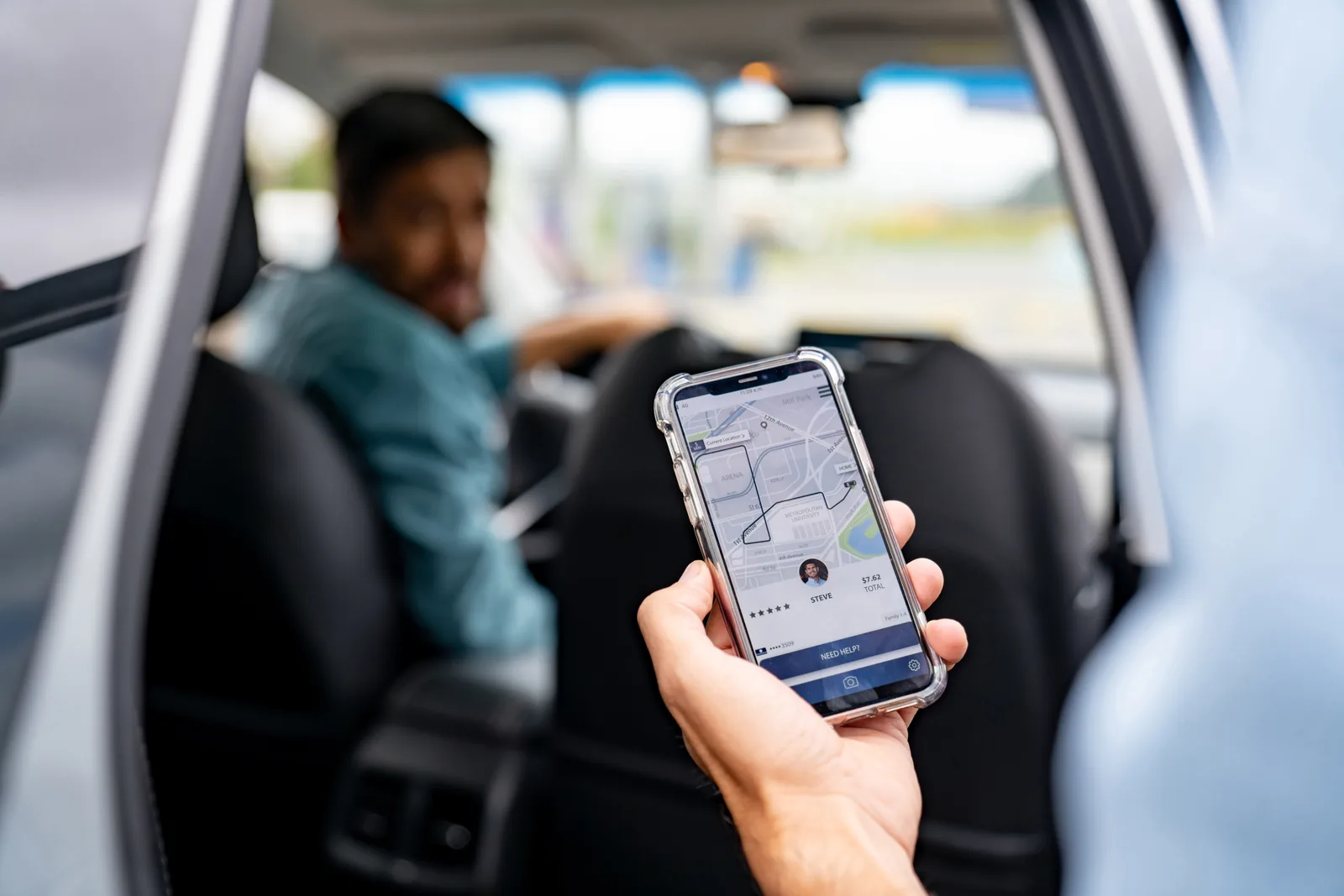
What Happens If Your Uber or Lyft Driver Causes the Accident in Washington? You got in the car expecting a normal ride across town. Instead, your driver rear-ended someone on Aurora, or turned left in front of oncoming traffic on Denny, and now you are hurt and holding a phone with a trip receipt on it. The question most people ask first is simple: who pays for this? The answer involves three separate things that are easy to blur together. There is the driver, who may have been negligent. There is the insurance policy that applies to the ride. And there is the company, Uber or Lyft, which is not the same thing as the policy that covers its drivers. This article walks through all three, plus how Washington handles shared fault and what kind of evidence tends to matter. Common ways a rideshare driver causes an accident Rideshare driving puts a person behind the wheel in traffic they do not know, on a schedule they are trying to beat, with an app running the whole time. The patterns that show up again and again include: Distraction from the app. Accepting a new request, checking the next pickup, or following turn-by-turn navigation on a phone mount takes eyes off the road at exactly the wrong moment. Speeding between rides to raise the number of trips completed in a shift. Unsafe turns , especially left turns across traffic and turns made late because the driver almost missed the route. Following too closely in stop-and-go traffic on I-5, SR 99, or downtown arterials. Fatigue , which is common among drivers working long stretches on nights and weekends. Unsafe pickups and drop-offs , including stopping in a travel lane, pulling to the curb across a bike lane, or letting a passenger out on the traffic side of the car. None of these are unique to rideshare. What is different is the volume of driving, the pressure of the app, and the fact that a commercial insurance policy sits behind the driver when the app is running. Driver fault does not mean an automatic payout This is the most common misunderstanding, and it is worth being direct about it. Washington law requires a large liability policy during a prearranged ride. That policy limit is a ceiling, not a check. Proving the driver was careless is the first step, not the last one. A claim still has to establish what injuries the accident caused, what treatment was reasonable, what the medical bills and lost income actually are, and what the harm is worth. An insurer can accept that its driver caused the accident and still dispute the value of the claim, or argue that some of the treatment was unrelated to it. So the honest framing is this: fault opens the door. What comes through it depends on evidence. Which policy applies, and when Washington's rideshare insurance requirements live in RCW 46.72B.180 . The requirements turn on what the driver was actually doing at the moment of the accident. Before the driver accepts a ride request, while logged in to the app. The required liability coverage is at least $50,000 per person for bodily injury, $100,000 per accident for everyone hurt, and $30,000 for property damage. During a prearranged ride. The required liability coverage is a $1,000,000 combined single limit for death, personal injury, and property damage. The timing matters. Under RCW 48.177.005 , a prearranged ride begins the moment the driver accepts the request, continues while the driver transports the passenger, and ends when the passenger leaves the vehicle. That means the $1 million requirement is already in place while the driver is on the way to pick someone up, before anyone is in the back seat. One more provision is worth knowing. If the policy the driver was supposed to carry does not provide coverage for some reason, including a lapse, the rideshare company has to provide the required coverage starting with the first dollar of the claim. What a combined single limit actually means A combined single limit is one pot of money for the whole accident. A typical personal auto policy splits coverage into separate buckets: so much per injured person, a higher cap for everyone hurt in the accident, and a separate amount for vehicle damage. A combined single limit does not divide it that way. The $1,000,000 covers bodily injury, death, and property damage together, for everyone with a claim arising from that accident. That has a practical consequence. If one person is seriously injured and nobody else is, the full limit is potentially available to that claim. If seven people are hurt, they are all drawing from the same $1,000,000. When several people are competing for the same limit Picture a rideshare vehicle with three passengers that runs a red light and strikes a minivan carrying a family of four. Seven people are hurt. Every one of them has a claim, and every one of them is looking at the same combined single limit. When the total value of the claims is likely to exceed the available coverage, the dynamics change. Insurers may move to resolve claims early and cheaply before the money runs low, and for someone with serious injuries the timing of a settlement can matter as much as its amount. It is also worth identifying whether any other coverage exists, such as a commercial policy on another vehicle involved. Who can bring a claim Liability coverage during a ride is not limited to the person who ordered it. If the rideshare driver caused the accident, the people who may have claims include: Passengers in the rideshare vehicle Drivers and passengers in any other vehicle involved Pedestrians struck in a crosswalk or at a pickup point Cyclists hit while riding, including in a bike lane during a curbside drop-off Family members bringing a wrongful death claim Seattle's density makes the pedestrian and cyclist scenarios more common than people expect. A driver pulling to the curb on a street like Second Avenue or Pike is stopping across space that people on bikes and on foot are using. Three different claims that get confused A claim against the driver. This is an ordinary negligence claim. You are saying a specific person drove carelessly and caused your injuries. Everything else follows from that. A claim handled under the rideshare policy. This is a coverage question, not a fault question about the corporation. The commercial policy exists because state law requires it. A passenger can pursue a claim under that policy without proving that Uber or Lyft did anything wrong as a company. A direct claim against Uber or Lyft. This is different, and harder. It means arguing the company itself did something legally wrong. That kind of claim depends on separate legal theories, separate evidence, and questions that are fact-specific and not fully settled. The reason these get tangled is that people see a $1 million rideshare policy and conclude that Uber is "on the hook." Insurance coverage supplied through a rideshare policy is not the same as the company being held directly liable. Driver status adds another layer. RCW 49.46.300 says a driver is not an employee or agent of a transportation network company for the purposes of certain listed titles of Washington law, but only if specific conditions are satisfied. That is conditional language tied to particular statutory purposes. It is not a blanket declaration that every rideshare driver is an independent contractor for every legal question, and it does not mean a company is immune from every possible claim. It also does not mean company liability is automatic. It means the analysis is more specific than a slogan. When more than one driver is at fault Plenty of accidents are not one person's doing. Another motorist may have cut across lanes, run a light, or stopped short without cause. Washington uses pure comparative fault. Under RCW 4.22.005 , any fault assigned to a person bringing a claim reduces the damages proportionally but does not bar recovery. If a jury assigned 20 percent of the fault to a claimant, the award would be reduced by 20 percent rather than eliminated. For a passenger, this usually matters less directly. A passenger in the back seat rarely has any share of fault. What matters more is how fault gets divided among the drivers, because that determines which policies pay and in what proportion. When two drivers each contributed, there may be two liability policies in play, and the argument between insurers over percentages can slow everything down. Evidence that helps establish what happened Rideshare accidents leave a paper trail that ordinary accidents do not: App status and trip records. Whether the driver had accepted a ride, and whether a passenger was in the vehicle, determines which coverage applies. The ride receipt , which typically shows the driver, the vehicle, the route, and the timing. Photographs of vehicle positions, damage, debris, skid marks, signals, and lane markings. Witness names and phone numbers , gathered at the scene while people are still there. The police or collision report , which records the officer's observations. It is useful. It does not settle civil fault. Dashcam footage , which many rideshare drivers run continuously. Nearby surveillance video from businesses, parking garages, and transit facilities. This footage is often overwritten within days or weeks, so it has to be requested quickly. A note on company records: Uber and Lyft are not going to hand a passenger their internal files on request. Under RCW 46.72B.180(11), a rideshare company or its insurer has to cooperate with insurers involved in a claims coverage investigation, including providing log-on and log-off records on request, and must retain data, communications, and documents related to insurance coverage or accident details for at least the applicable limitations period plus two years. That is a real obligation, but it runs to insurers and is limited to coverage and accident information. Getting anything broader generally takes formal legal process. Where the driver's personal auto policy fits Many people assume the driver's own car insurance is the first place to look. Often it is not. Washington law expressly allows personal auto insurers to exclude coverage for losses that happen while a driver is logged in to a rideshare network or providing a prearranged ride. Most personal policies contain that exclusion. So in an accident that happens mid-ride, the personal policy may provide nothing at all, and the commercial rideshare policy is where the claim belongs. The reverse is also true. If the driver had the app closed and was running errands, the commercial policy does not apply and the personal policy does. This is exactly why app status is one of the first facts worth pinning down. Practical steps worth taking The short version: get medical attention and keep your appointments, save your trip receipt and screenshots from the app, write down what you remember while it is fresh, keep track of your costs and missed work, and be careful about recorded statements before you understand the claim. Common questions Does Uber's insurance cover me if their driver caused the accident? If you were a passenger on a prearranged ride, a commercial policy meeting Washington's requirements should apply, and state law sets a $1,000,000 combined single limit for that period. Whether and how much that policy pays on your specific claim depends on the evidence and the extent of your injuries. Can I sue Uber or Lyft directly? Making a claim under the applicable rideshare policy is different from suing the corporation for its own conduct. A direct claim against the company depends on separate theories and evidence, and those questions are fact-specific. It is not automatic, and it is not impossible. Is the rideshare driver an employee of Uber or Lyft? Washington law addresses that question for specific statutory purposes, and only when certain conditions are met. It is not a single yes-or-no answer that applies across every legal issue. What if the other driver was mostly at fault instead? Then the other driver's liability coverage becomes the primary source, and the rideshare policy's role depends on how fault is apportioned. Washington's comparative fault rule allows fault to be divided among multiple parties. I was walking, not riding. Does the rideshare policy matter to me? Yes. If a rideshare driver struck you while on a prearranged ride, the same commercial liability coverage applies to your claim as to a passenger's. Was the driver on the app? How would I even know? If you were the passenger, your own trip record establishes it. If you were in another vehicle or on foot, it is harder, which is why the police report, witness accounts, and any request for the company's log-on records matter. Sorting out who is responsible after a Seattle rideshare accident The insurance structure behind Uber and Lyft is genuinely different from a two-car accident on a residential street, and the difference is not just the size of the policy. It is the number of parties, the way coverage turns on app status, and the gap between what a policy covers and what a company can be held responsible for. If you were hurt in a rideshare accident in Seattle or elsewhere in Washington, it is worth having someone look at the specific facts. Keep in mind that Washington generally allows three years for a personal injury action under RCW 4.16.080 , though the deadline that applies to any particular claim depends on its details. Sources RCW 46.72B.180 — Insurance that covers commercial transportation services RCW 48.177.005 — Definitions RCW 49.46.300 — Transportation network companies RCW 4.22.005 — Effect of contributory fault RCW 4.16.080 — Actions limited to three years