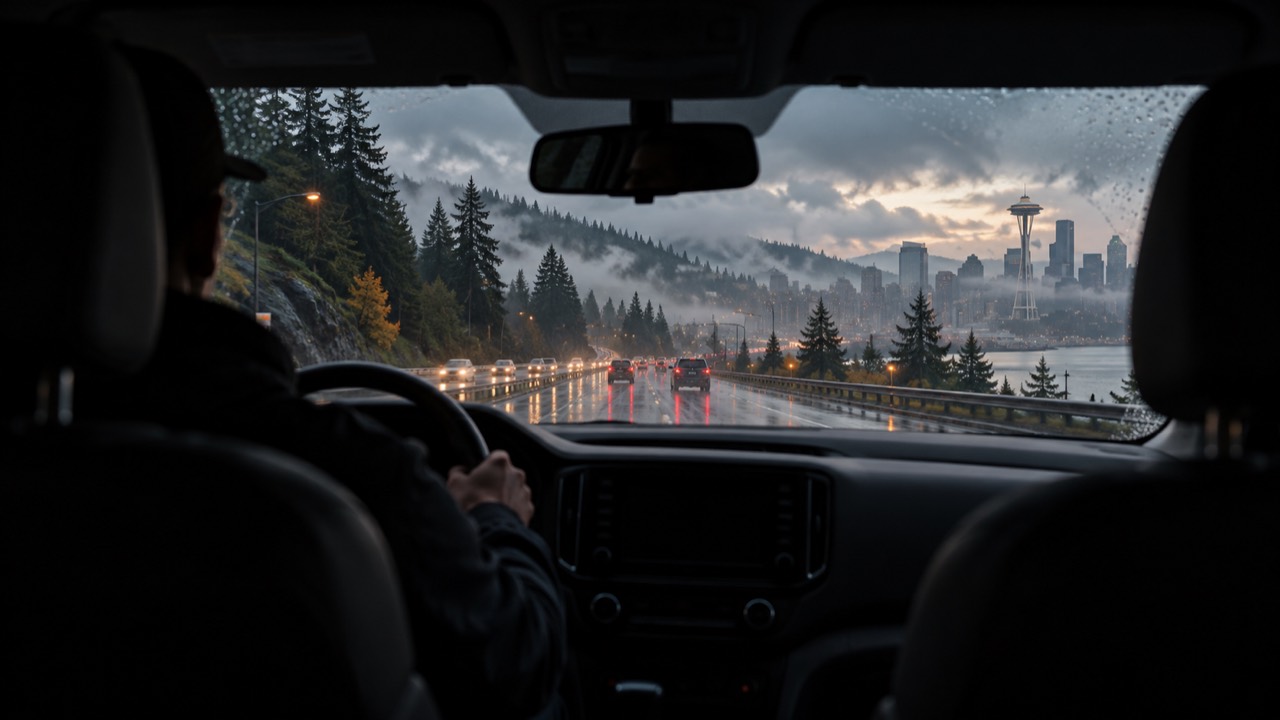
The same camera footage that helped show someone else loaded the cargo also preserved the conversation prosecutors used to argue that the driver deliberately avoided learning what he was carrying.
In January 2025, Wenjian Zhuo accepted what he believed was a long-distance passenger job. The customer told him to expect one rider with six or seven pieces of luggage. Zhuo left Queens before dawn and drove nearly 400 miles to a pickup point near the Canadian border.
No passenger was waiting when he arrived.
Instead, another man loaded boxes, bags and suitcases into Zhuo’s Toyota Sienna, then told him he would not be making the trip. Zhuo called the customer and confirmed that he was now being paid to transport the cargo alone. He started driving back toward New York City.
About 22 minutes later, Border Patrol pulled him over. Inside the van were 211 vacuum-sealed packages containing approximately 207 pounds of marijuana.
Zhuo gave investigators access to his phone and the cameras inside and outside his van. The footage supported much of his account. It showed that another man had loaded the cargo. It captured identifying information that helped investigators find that man. It also showed Zhuo cooperating after the stop and offering to help agents catch the person waiting for the delivery.
But the cameras had recorded something else: a phone conversation Zhuo had while driving away from the pickup. That conversation became central to the government’s case against him.
The result is more difficult to explain than the short clips circulating online suggest. The evidence supports Zhuo’s claim that he did not arrive knowing he was about to transport marijuana. It also shows why a jury concluded that he began to suspect the truth and deliberately avoided confirming it.
Court records spell his name Wenjian Zhuo. Some social media posts and videos refer to him as Wenzian Zhou.
A Passenger Trip That Changed Without Warning
Zhuo was 31 and living in Queens when he accepted the job. He had previously driven for Uber but was working independently by then, finding customers through referrals and Chinese social platforms including RedNote and WeChat. He drove international students, tourists and private clients, and had started building a small travel business.
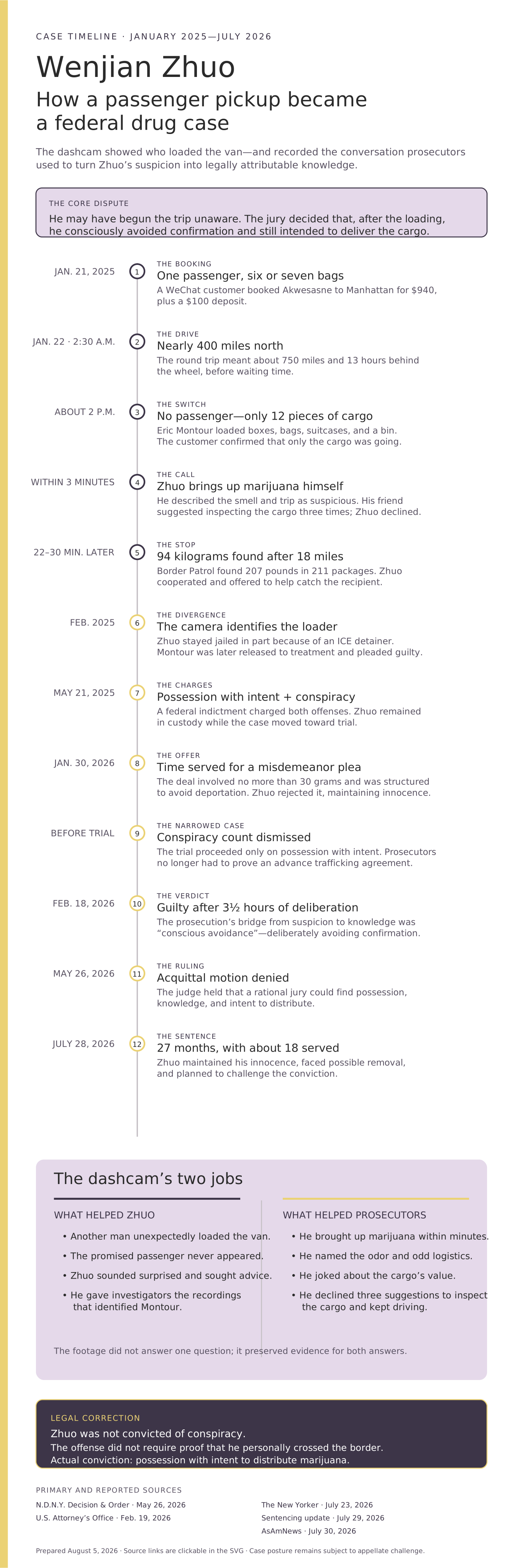
The January 22 trip looked like another private booking. The customer agreed to pay $940, including gas and tolls, and sent a $100 deposit. Zhuo believed he would pick up a passenger in northern New York and drive that person to Manhattan.
After approximately seven hours on the road, Zhuo reached a gas station near the Akwesasne Mohawk Reservation. He waited several more hours before a man named Eric Montour arrived in a white pickup truck. Montour led him to a nearby property and loaded twelve items into the van, including cardboard boxes, luggage, bags and a plastic bin.
Zhuo had expected the passenger to be Chinese. Montour was not, and the two could barely communicate. Once the loading was finished, Montour did not get into the van.
Zhuo contacted the customer, who told him to bring the cargo to New York City without the passenger. He accepted the change and left. Thirty seconds after ending that call, he phoned a fellow driver for advice.
The 22 Minutes That Changed the Case
The call to Zhuo’s friend began as a request for help. Zhuo described the unexpected cargo, the unusual pickup and the customer’s behavior. He wondered aloud whether the boxes contained something illegal.
Then he raised marijuana as a possibility.
According to the federal court’s May 2026 order, Zhuo mentioned marijuana several times. He asked what it smelled like and said he noticed a fragrant odor in the van. He questioned why someone would spend nearly $1,000 to have the cargo driven to New York City. He joked that the contents might be worth millions and that he could sell them and retire. He also suggested that his messages with the customer could prove he was “only a delivery guy” if he were stopped.
The friend told Zhuo to open a box and inspect it. The court found that the suggestion was made three times and that Zhuo declined each time. Zhuo continued driving toward the delivery address until Border Patrol stopped him about 18 miles from the pickup.
There are understandable reasons why a driver would hesitate to open sealed customer property. Zhuo was far from home, spoke limited English and had only recently learned that the passenger was not coming. His customer had told him not to open the packages. His attorneys later argued that he was worried about tampering with property entrusted to him and believed his chat history would show that he had accepted an ordinary transportation job.
He also had hours of driving ahead of him and very little time to decide what to do. The government stopped him before he had been on the road for half an hour.
The jury nevertheless heard a man identify marijuana as a serious possibility, discuss how he might explain the situation if caught, refuse repeated suggestions to check and continue toward the agreed delivery point. Those 22 minutes gave prosecutors a different case than the one suggested by the loading footage alone.
Why the Footage Did Not Clear Him
Zhuo was initially indicted for both conspiracy and possession with intent to distribute. The government dismissed the conspiracy charge before trial.
That matters. Prosecutors did not obtain a conviction based on proof that Zhuo had planned the shipment, crossed the Canadian border or previously agreed to participate with Montour. The February 2026 trial concerned the marijuana already inside Zhuo’s van and what he understood while he controlled it.
Federal law generally requires the government to prove that a defendant knowingly possessed a controlled substance. Knowledge can also be established through a doctrine commonly called willful blindness or conscious avoidance. It applies when a person believes there is a high probability that a fact is true and deliberately avoids learning the truth.
The standard is supposed to require more than carelessness. The trial judge instructed the jury that Zhuo could not be convicted merely because he was negligent, foolish or mistaken. Jurors had to decide whether his uncertainty was the result of a conscious decision not to confirm what he already strongly suspected.
Prosecutors focused on the sequence captured by Zhuo’s own recording: the job abruptly changed from passenger transportation to cargo delivery; Zhuo noticed the smell and unusual circumstances; he repeatedly named marijuana; he discussed evidence he could use to distance himself from the cargo; and he refused to inspect it after his friend urged him to do so.
The jury convicted him of possession with intent to distribute after deliberating for approximately three and a half hours.
Zhuo later asked the judge to set the verdict aside for insufficient evidence. His new attorney argued that suspicion was not knowledge, 22 minutes was not enough time to establish deliberate avoidance, and Zhuo had legitimate reasons not to open a customer’s packages. The judge denied the motion. In the court’s view, a rational jury could find that Zhuo strongly suspected marijuana was inside and chose to remain uncertain while continuing the delivery.
What the Dashcam Established in Zhuo’s Favor
The conviction does not erase what the footage showed for the defense.
Zhuo arrived expecting a passenger. Montour, not Zhuo, brought the marijuana to the van and loaded most of the cargo. The cameras captured Montour and the Ontario license plate on his truck, helping investigators identify him. There was no evidence presented that Zhuo knew Montour before the pickup.
Montour was later arrested and pleaded guilty to possession. The unidentified person who arranged the trip through WeChat had not been located by the time of Zhuo’s trial.
Zhuo also behaved differently after the stop than many people would expect from a willing participant in a drug shipment. He immediately described the job to agents through Google Translate. He gave them access to the phone containing his customer communications and explained how to retrieve the recordings from his camera system. He even offered to continue to the delivery location under law-enforcement supervision so agents could arrest the recipient. They declined because it was too dangerous.
None of those facts required the jury to acquit him under a conscious-avoidance theory. They do, however, make the case genuinely troubling. Zhuo’s cooperation helped establish that he was not the person who arranged or loaded the shipment. The same evidence then allowed prosecutors to narrow their focus to the brief period after he became suspicious.
The Plea Offer He Could Not Bring Himself to Accept
Before trial, prosecutors offered Zhuo an extraordinary way out. He could plead guilty to misdemeanor possession of no more than 30 grams of marijuana for personal use and receive time served. The offer was specifically structured to help him avoid deportation.
The offer bore little resemblance to the 94 kilograms found in his van. Zhuo had already spent more than a year in custody, and his attorney advised him to accept it.
He refused because he continued to maintain that he had committed no crime. He was also afraid that even a minor conviction could later be used against him as a lawful permanent resident. At a pretrial hearing, he told the judge that he wanted justice after spending hundreds of days in jail for something he said he had not done.
Rejecting the offer did not prove his innocence, just as making it did not establish that prosecutors believed their case was false. It does show how differently Zhuo understood the choice before him. The government saw a resolution designed to let him go home. Zhuo saw a permanent admission that he had knowingly possessed drugs.
He chose a trial and lost.
Eighteen Months Away From a Daughter He Had Never Held
Zhuo’s partner, Minxing Zou, was eight months pregnant when he was arrested. Their daughter, Selene, was born in February 2025 while he remained in custody. Zou asked jail officials to allow him to attend the birth and offered to cover the expense, but the request was denied.
Zhuo was also denied pretrial release. Prosecutors argued that an immigration detainer made him a flight risk because immigration authorities could take custody of him if he were released. Montour, meanwhile, was released to inpatient treatment several weeks after his arrest and later remained out of jail while awaiting sentencing.
By the time Zhuo went to trial, his daughter was turning one. He had chosen not to meet her for the first time inside a jail visitation room. His family reported spending approximately $60,000 on his defense, and the government pursued a separate forfeiture action involving the Toyota Sienna he used for work.
On July 28, 2026, the court sentenced Zhuo to 27 months, with credit for the approximately 18 months he had already served. He declined to express remorse for conduct he still says he did not knowingly commit. His attorney has announced plans to appeal. Even after completing the sentence, Zhuo faces the possibility of deportation because of the felony drug conviction.
What This Case Says About Independent Driving Work
Zhuo was often described online as an Uber driver, but this was not an Uber trip. He had previously driven for the company and was operating his own independent service when the WeChat booking arrived.
That distinction did not determine the criminal case. Uber or Lyft would not have provided Zhuo with a federal criminal-defense attorney, and a platform record would not have changed what was said during the call with his friend.
The off-app arrangement did leave him without a verified rider account, platform dispatch record or company-held trip history showing how the job had originally been presented. His customer communications and camera footage were the only contemporaneous records of the agreement. Fortunately for Zhuo, those records were unusually detailed. Unfortunately, they preserved the damaging conversation too.
For rideshare drivers and passengers, that is one practical lesson worth keeping. When a crash, assault or insurance dispute follows a trip, app status and trip records can establish who requested the ride, when it began, where it was going and which insurance policy was active. Those questions usually arise in civil claims rather than federal criminal prosecutions, but the importance of preserving the record is the same.
Where the Case Stands
Wenjian Zhuo remains convicted of possession of marijuana with intent to distribute. He was not convicted of conspiracy or of personally smuggling marijuana across the Canadian border, despite the Department of Justice using “smuggling” in the headline of its press release.
The dashcam did not neatly prove his guilt or innocence. It documented a driver arriving for one kind of job and being handed another. It helped law enforcement identify the man who loaded the drugs. It showed Zhuo trying to make sense of a situation he had not expected. It also recorded the suspicions, jokes and refusals that prosecutors used to establish conscious avoidance.
That is why the case continues to disturb people. Zhuo may have been completely unaware of the shipment when he began the trip and still have crossed a legal line during the minutes after the boxes entered his van. The jury concluded that he did. Whether 22 uncertain minutes should carry a felony conviction, a prison sentence and the possible loss of his home in the United States is the question his appeal will now have to confront.
A Note for Washington Rideshare Drivers and Passengers
The Law Office of J.D. Smith does not handle federal criminal-defense cases and is not involved in Zhuo’s case. We represent people in Washington civil matters involving rideshare accidents, driver injuries and insurance-coverage disputes.
If an insurer is disputing whether a driver was logged into an app, whether a trip had started or which rideshare policy applies, call 206-588-8529 to discuss the available records and coverage.
Sources and Publication Notes
- United States v. Zhuo, Decision and Order denying the Rule 29 motion, May 26, 2026.
- U.S. Attorney’s Office, Northern District of New York, February 19, 2026.
- Jennifer Gonnerman, “How a Chinese Immigrant Driver Got Entangled in a Drug Bust”, The New Yorker, July 23, 2026.
- Jennifer Gonnerman, “A Severe Punishment in a Surreal Drug Case”, The New Yorker, July 29, 2026.
- Randall Yip, “Rideshare Driver Gets 27 Months for Drugs Loaded by Passenger”, AsAmNews, July 30, 2026.


Join the Conversation
Comments are moderated before publication. Keep it relevant, civil, and respectful of the people involved.